


 hello@kootenaymade.ca
 Castlegar, BC. Serving the Kootenays and beyond.
The stand is full, the corn is on, and the internet still says closed for winter.
Farm and farm stand websites that say what is ready before anyone drives out.
I build farm and agriculture websites from Castlegar, BC for farm stands, u-pick, CSA shares, butchers, garden centres, and feed suppliers. Customers want three things: what is ready, when you are open, and where the gate is. Publish those and change them yourself, in a minute, from the truck.

Why a shopper drives past two grocery stores
I treat a farm site as the sign at the road, rebuilt so it works at midnight and reaches the next valley. What is ready, what it costs, when the gate is open, how to find the driveway, and how to get on the CSA list. All of it editable by you from a phone in the field, because a farm site that only I can update is stale by the second week of July. The Facebook page keeps its job. The site holds the facts everything else points at. The page by page version is my guide to a farm website that sells direct.
- 01
Freshness is a promise, and it needs a date
Nothing says fresh like a page that changed this morning. An in-season board with today’s list does more for trust than a paragraph about family farming, because it proves somebody was in the field a few hours ago.
- 02
A wasted drive is never forgiven
Twenty minutes out and a locked gate ends the relationship. Accurate seasonal hours, a closure notice you can post in ten seconds, and honest picking conditions are worth more than any photograph on the site.
- 03
People buy the farm before they buy the food
A customer choosing farm-gate over the grocery store is buying who grew it and how. Your name, the field, the animals, the practices you actually follow. Say it in your own words and the price stops being the comparison.
- 04
The season sells in the off season
CSA shares, beef boxes, u-pick weekends and bedding plants all get decided months before they exist. The farm whose share page is live in February fills the season while the farm posting in May is chasing it.
- 05
Chefs and grocers plan on paper
Wholesale buyers need varieties, volumes, a delivery day and one person who answers. Publish that and you get a standing order rather than a one-off, which is the difference between a good week and a good year.
The work a first farm build gets measured against
No farm or agriculture build sits in the portfolio yet. Here is the standard the first farm, butcher, or garden centre will get.

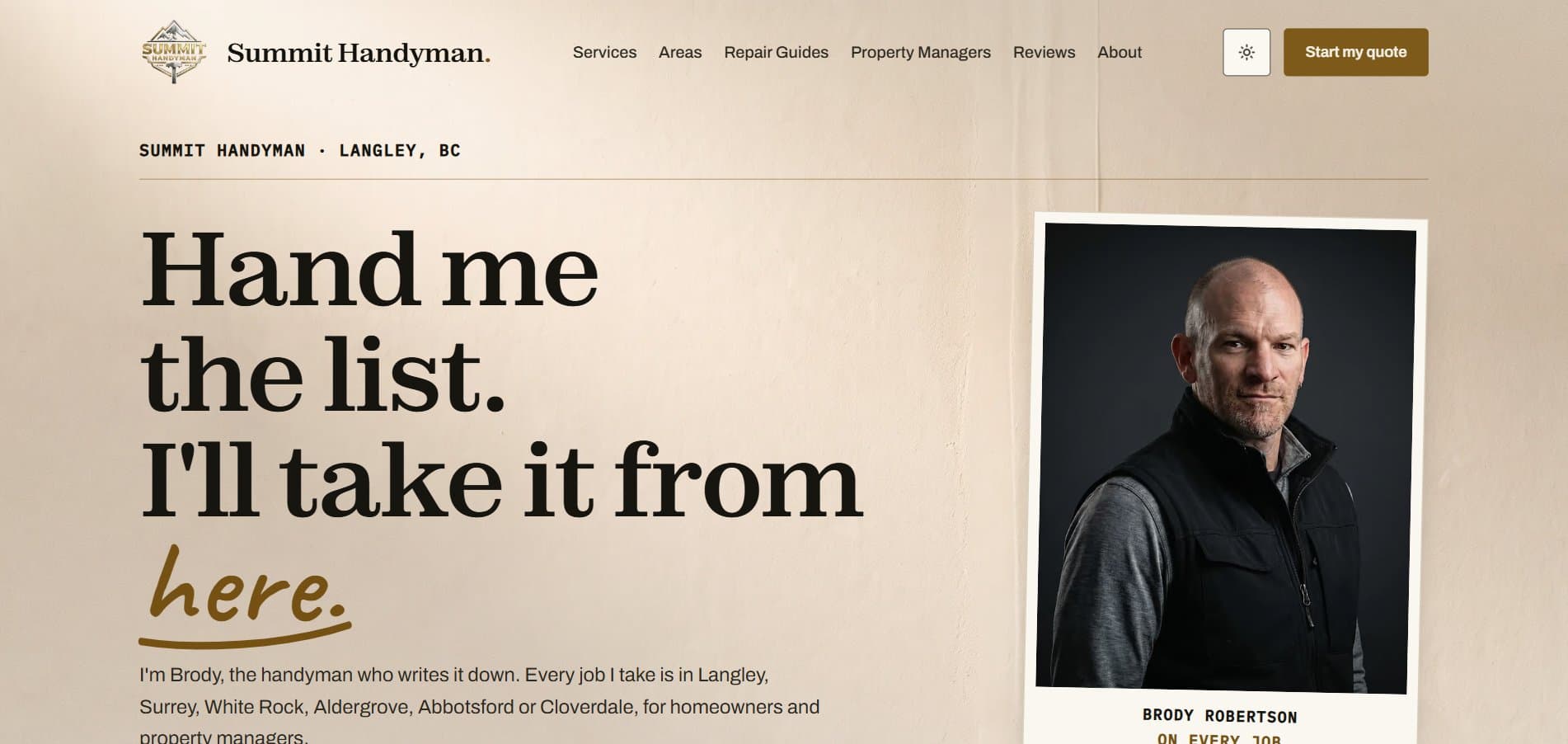
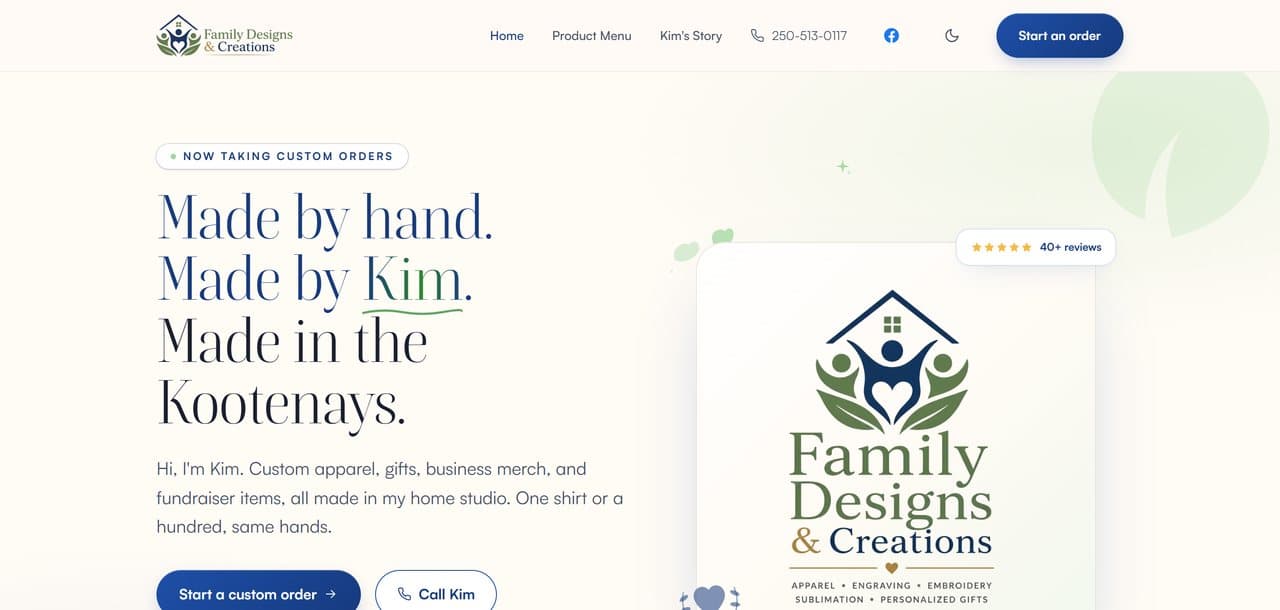
What a farm site carries through a season
- 01
The stand, the hours, and finding the gate
Seasonal hours, market days, payment methods, and directions written for somebody who has never turned off that highway. A photo of the driveway from the road, where to park, and what to do if the stand is on the honour system. This is the page that turns a curious phone into a car in the yard.
- 02
U-pick, farm days, and what the field is like
Rows open, container rules, price by pound or by basket, whether dogs and strollers work, shade, washrooms, and the honest note about conditions after rain. A family planning a Saturday morning wants to know what they are walking into before they load three kids into a truck.
- 03
CSA shares and boxes, sold in advance
Share sizes, what a typical week holds, the number of weeks, pickup points and dates, and a deposit taken through a processor you already use. Written to be read in February by somebody planning a whole summer, with a waiting list once the shares are gone.
- 04
Meat, cut sheets, and the butcher counter
For ranches and butchers, the questions are specific: hanging weight, cut sheet options, deposit, pickup window, and where the animal is processed. Publishing them turns a nervous first-time buyer into a customer who books a half next year without asking twice.
- 05
Wholesale, restaurants, and the standing order
Crops and varieties, typical volumes, delivery days, minimums, and one contact who answers. Chefs and grocers plan menus weeks ahead, and the farm they can plan around is the farm they keep buying from.
The standard that comes with every build I ship.
- In-season board you update yourself from a phone
- Seasonal hours, market days, and a site-wide closure notice
- Directions with a photo of the driveway and real parking notes
- U-pick pages with rules, prices, and honest field conditions
- CSA share and box pages with deposits through your processor
- Cut sheets, hanging weight, and pickup windows for meat sales
- Wholesale page with varieties, volumes, and delivery days
- Spam-filtered forms, privacy policy, and CASL-ready email capture
- Accessibility to WCAG 2.2 AA, performance, and analytics baked in

The drive out that nobody made
A farm loses customers to uncertainty, not to price. Every row below costs somebody a wasted afternoon and costs you produce that had to move this week. The last column is what fixes it.
Nothing says what is ready right now
Costs them
They want strawberries this weekend and have no way to know if the field is picked out.
Costs you
A full stand on Saturday and a compost pile on Monday, every year, in the same week.
FixAn in-season board you update from a phone, so today’s list is today’s list.
Hours change and the site does not
Costs them
They drive twenty minutes on a Tuesday and find a locked gate and a hand-written sign.
Costs you
One wasted trip and that family never tries again, whatever you post next spring.
FixSeasonal hours and market days you edit yourself, with a closure notice that shows on every page.
The CSA sign-up lives in a comment thread
Costs them
They have to message you, wait, and hope a share is left before they can plan the groceries.
Costs you
Shares sold one message at a time in February, when you should be starting seed.
FixA share page with sizes, pickup points, dates and a deposit, so the season sells while you work.
Nobody knows where the gate actually is
Costs them
The map pin is on the back field, the driveway is unmarked, and the phone has no signal.
Costs you
Cars in the wrong yard, calls during the pick, and customers who give up at the highway.
FixReal directions, a photo of the driveway from the road, and parking written for someone who has never come.
Wholesale buyers cannot tell what you grow
Costs them
A chef or a grocer needs volumes, varieties and a delivery day before they can plan a menu.
Costs you
Wholesale volume that goes to a distributor because nobody could see what you had.
FixA wholesale page with crops, varieties, typical volumes, delivery days and one contact who answers.
In season, on the site
The single most useful page a farm can own is a board that says what is ready today. You change it from your phone between the field and the stand, so it reports today instead of a crop calendar guess about August. Peas on. Strawberries picked out until Thursday. Corn from the weekend. The customer reads a real answer and either drives out or waits, and both of those keep them coming back.
It stays honest because it is yours to edit. You change it yourself, in the time it takes to type it. The same control runs the hours and the closure notice, so a smoky week, a hailstorm or an early sell-out shows up on every page in the time it takes to type it. There is no live inventory feed pretending to know what is in the cooler, because that would be a lie the first time the count drifted. It is your word, dated, and that is exactly what a customer wants from a farm.
- A what-is-ready board you edit from a phone, in the field
- Seasonal hours and a closure notice that shows on every page
- Dated updates, so a customer can see when you last touched it
- No fake live inventory, because a wrong count costs more than a blank one
Food safety, labels, and the claims you can make
A site in this category is judged on more than looks. These are the obligations and reassurances I build in by default, so the business stays credible and protected.

Organic and other protected claims
In British Columbia the word organic is tied to certification, and it gets checked. I write the site to state exactly what you hold, name the certifying body, and use plain descriptions of your practices everywhere else. An honest description of how you farm sells better than a word you cannot back.
Meat, processing, and licensed facilities
Meat sold to the public in British Columbia comes from a licensed facility, and buyers increasingly ask where. The site states where your animals are processed and what you can legally sell direct, in your words, so nobody has to guess at the counter.
Farm-gate sales and local rules
What you may sell at the gate depends on your zoning and, for many Kootenay farms, on Agricultural Land Reserve rules. I publish what you tell me you are permitted to do and link to the authority rather than paraphrasing regulation. This is a website, not legal advice.
Allergens and food handling, stated in your words
Baked goods, preserves and prepared items carry allergen questions and, in some cases, labelling requirements. I put honest ingredient and allergen notes beside each product and keep the wording under your control, because you are the one who knows what is in the kitchen.
The email that says the corn is on
Canada’s Anti-Spam Legislation covers the email that tells people the corn is on. Sign-up forms capture express consent, name the farm as the sender, and carry a working unsubscribe, so the list you build stays yours and stays legal.
Accessibility to WCAG 2.2 AA
The Accessible British Columbia Act keeps moving, and a farm site gets read on a phone in bright sun by people of every age. I build to WCAG 2.2 AA: strong contrast, keyboard navigation, labelled forms, and alt text on every field photo.
Want this standard on your site?
One conversation, no pitch deck. Tell me where the business is stuck and I will tell you what I would build.
42 of the 86 Farms & farm stands on The Kootenay List have no website, as of September 3, 2026. The ones that do are the ones a customer can find.
What a build like this costs.
Most builds here start at $2,000, or $500 today and $142 a month on Own It Monthly ($2,204 total)
The Trailhead · typical timeline 2 to 3 weeks
A farm needs the seasonal board, the hours, the directions and a sign-up path, all editable by you. That is the Trailhead, my starter tier, so there is nothing smaller to point you at. Farms shipping boxes province-wide or running a full online store step up to the Storefront instead.
The honest answer depends on what you actually need, not on a package name. Start with the free check-up or the contact form, and I will book a proper 45-minute consultation with you, no pressure either way.
Comparing options right now? What a website should cost breaks down how to read any quote, and who actually owns your website covers what you keep if you ever leave, on any platform, including mine.
The Facebook page, the market stall, and the sign at the road does the plumbing. KMD wins the decision.
A post ages out in a day and a sign only works on your road. The person deciding where to buy a lamb, book a u-pick, or find a CSA share is searching, and the farm that answers gets the drive.
A farm page, a Saturday stall and a sandwich board have sold Kootenay produce for a long time, and they still work. The page reaches whoever is scrolling that hour. The stall reaches whoever came to town. The sign reaches whoever drove past. None of them is there at nine on a Thursday night when a family is planning the weekend.
What the page and the stall already do
- Regulars who already follow you and already know the way
- A weekly post that reaches a slice of the people who liked the page
- Saturday sales to whoever walks the market
- Passing traffic on your own road, in daylight, in season
Where the upgrade actually pays off.
- 01
Publish what is ready today and let a dated update do the work a paragraph about freshness cannot.
- 02
Sell the CSA share and the beef box in February, while the field is still frozen.
- 03
Photograph the driveway from the road, because half of your lost customers never found the turn.
- 04
Give chefs and grocers a wholesale page with volumes and a delivery day, and earn the standing order.
- 05
Keep the hours under your own thumb, so the gate and the internet always agree.
Where I would start.
- Custom websitesThe Trailhead is where most builds for this kind of business land, and every tier is priced on the page.
- Shopify storesBoxes, shares and preserves sold online are a store job, with shipping zones and pickup days built in.
- Grant writingFarm funding programs open and close, and a strong application takes real hours to write.
Related guides.
- BC Small Business Website Grants and Funding (2026)
- Do You Actually Need a Website in 2026?
- A Farm or Orchard Website That Sells Direct
- BC Small Business Grants and Programs: What Is Open (2026)
- Etsy vs Your Own Store: The Honest Math for Canadian Makers
- Best Ecommerce Platform for a Canadian Small Business: Shopify vs WooCommerce vs Custom
- How to Set Up PST and GST on Shopify in BC
- Stripe vs Square vs PayPal Fees in Canada, with Shopify Payments
- How a Local Shop Can Use Content to Sell More Without Feeling Pushy
- Kootenay Small Business Grants and Funding (2026)
What growers and butchers ask me
Our Facebook page does this already. Why add a website?+
The page reaches the slice of your followers who happen to be scrolling. A search reaches everybody looking for a u-pick or a lamb this weekend, including the family that moved here in March. Keep posting, and let every post point at a page that holds the facts.
How much does a farm website cost?+
Most farms land on the Trailhead: $2,000, or $500 today and 12 monthly payments of $142 on Own It Monthly, which is $2,204 all in, typically delivered in 2 to 3 weeks. Farms shipping boxes across the province or running a full online store move up to the Storefront at $5,500, or $1,375 today and $386 a month for 12 months ($6,007 total).
Can I really update it myself during the season?+
That is the whole design. The in-season board, the hours and the closure notice are yours, editable from a phone in about a minute. A farm site somebody else has to update is wrong by the second week of July, and a wrong site costs you more than no site.
Can it show live inventory of what is in the cooler?+
I will not build that, and here is why. The count drifts the first busy Saturday, and one wrong number teaches a customer to stop trusting the page. A dated line in your own words is honest, faster to keep current, and reads better to the person planning a drive.
Can we take CSA deposits and box orders online?+
Yes. Deposits and prepaid shares run through a processor like Square or Stripe, so card details never touch the website itself. You get the order with the share size, the pickup point and the contact attached, ready to add to your list.
We only sell three months of the year. Is a site worth it?+
The short season is the argument for it. Those three months are decided in the two months before them, and a site that holds the dates, the share sign-up and the hours works while you are planting. The rest of the year it quietly answers the question of whether you are still there.
What about the farms that have never had a website?+
That is most of this category. On The Kootenay List, the register of 5,836 Kootenay businesses I built and maintain, roughly 120 farms, farm stands, butchers and garden centres are listed, and close to half have no website at all. Being findable is still an advantage here, not table stakes.
Do you need professional photos?+
Your phone in the field at the right hour beats a hired session for this category, and I will tell you exactly what to shoot: the driveway, the stand, the rows, the animals, hands with dirt on them. I direct the list and handle the compression so the pictures load fast on a rural connection.
Will it load out here on bad signal?+
It has to, so I build for it. Static pages, compressed images, no heavy scripts, and a phone number that dials with one tap. Somebody sitting at the highway junction with two bars should have your hours and your directions in a second or two.

Who builds this
I am Brett, the person behind Kootenay Made Digital. I plan, design, and build every site myself from Castlegar, BC, so the person you email is the person doing the work.
Founder, Kootenay Made Digital · Castlegar, BC
Get the gate open before the first pick
The season is short and the produce does not wait. A site that says what is ready, when you are open, and how to find the gate turns a curious phone into a car in your yard on Saturday morning.
No website yet?
Start My First WebsiteAlready have one?
Get a Free Check-Up