


 Castlegar, BC. Serving the Kootenays and beyond.
The round gets sold before the tee sheet ever opens.
Golf course website design that sells the round before the tee sheet opens.
A golfer picks the course in one phone scroll, and an empty tee sheet in shoulder season is expensive. I design golf course websites from Castlegar, BC that sell the round first, the story, the green fees, the trust, then hand the golfer to the tee sheet you already run.

What a golfer decides before green fees ever come up
I treat the course website as a destination sales system. The course story, hole-by-hole detail, honest green fees and conditions, the membership and member-guest pitch, the tournament and wedding inquiry path, dining, and seasonal campaigns all get engineered for the phone in a golfer’s hand, and all of it feeds the tee sheet, member system, and inbox you already run. The software keeps the operation honest. The website makes a stranger choose your first tee over the course twenty minutes down the highway.
- 01
Golf is bought as a daydream
Before anyone compares green fees, a golfer pictures the view off the first tee, the patio after, the foursome text thread, the stay-and-play weekend. If the site does not let them feel the round, the rate grid never gets a chance to close it.
- 02
Friction is where the booking dies
Green fees by day and time, twilight pricing, cart and rental cost, dress code, course conditions, weather, directions, and the food situation all need to be obvious on a phone in seconds. Every unanswered question is a quiet reason to book the other course.
- 03
Membership is belonging, not access
A prospective member is buying a summer, a routine, a club, a status, a member-guest to invite a friend to. The page has to sell the community and the identity first, then make the application and the renewal feel easy and obviously worth it.
- 04
Trust is the silent filter
A secure checkout, a clear refund and weather policy, honest pricing with tax shown, and a real privacy stance decide whether a first-time visitor types in a card number. Get sloppy here and the booking quietly evaporates before anyone calls the pro shop.
- 05
The shoulder season is won in advance
May and September rounds do not book themselves. Golfers planning a Kootenay trip lock stay-and-play dates in weeks ahead, and the course whose website makes that plan easy owns the shoulder season while the course relying on drive-by traffic discounts green fees to fill the tee sheet.
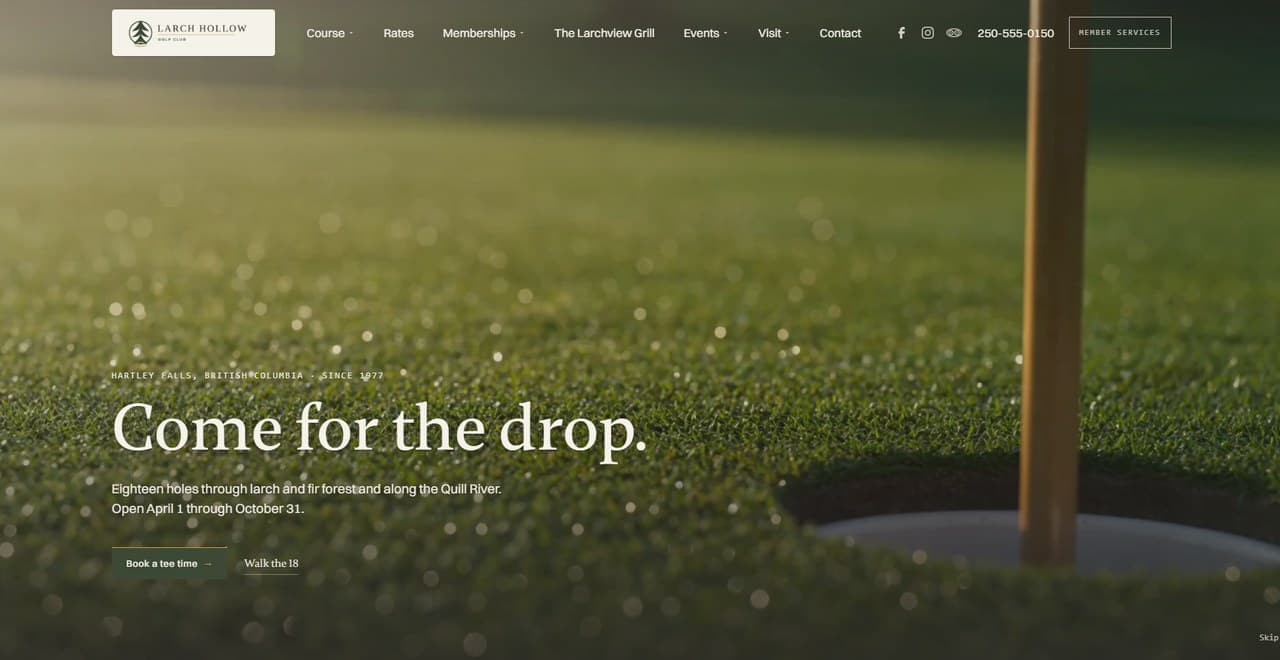
See the Larch Hollow Golf Club concept in the wild.
Concept build from my portfolio, no real affiliation
Larch Hollow Golf Club is the fictional destination-course build that proves the system end to end: tee-time paths, rate clarity, hole-by-hole course story, visitor planning, stay-and-play content, tournaments, dining, memberships, and lessons, all structured for the phone in a golfer’s hand on the first tap.
- 41 public sitemap URLs
- Tee-time and rate-clarity paths
- Events, dining, lessons, and membership routes
- Visitor planning and stay-and-play content
- Mobile-first course decision structure
- Fictional details used to keep the showcase clean and verifiable
Larch Hollow Golf Club is a fictional concept build created to demonstrate the category. No real course affiliation, booking results, visitor outcomes, or operating performance should be implied.
What a course build covers, first tee to nineteenth hole
- 01
Tee times, green fees, and visitor confidence
Green fees by season and time of day, twilight and cart pricing, rentals, dress code, conditions, directions, and dining answered up front on one fast page, then a clean handoff into your live tee sheet so the booking finishes where the operation already lives.
- 02
Memberships, leagues, and the member-guest
Categories, benefits, social proof, pricing, and an application and renewal path that frames membership as belonging, with clear terms so there are no surprises at signup. League nights and the member-guest get real pages too, because those are the events that turn a green-fee golfer into next season’s member.
- 03
Tournaments, weddings, and corporate events
High-intent inquiry pages for shotgun tournaments, fundraisers, corporate outings, weddings, and banquets, the bookings that carry a course’s margin. Each inquiry arrives qualified, with dates, group size, and budget attached, instead of dying in a voicemail box over a long weekend.
- 04
Pro shop, dining, and gift cards
Merchandise highlights, restaurant and patio hours, menus, and gift-card paths that turn the clubhouse into a year-round revenue line. Gift cards alone can quietly fund the off season when the copy and the checkout around them are done properly instead of buried in the footer.
- 05
Seasonal campaigns and search that compounds
Opening day, season passes, league nights, lessons, and gift-card pushes built as repeatable campaigns, backed by golf course SEO that ranks for the searches Canadian golfers actually type, and feeding a consent-based email list the club owns outright rather than renting from a platform.
The standard that comes with every build I ship.
- Premium, mobile-first course homepage
- Tee-time and green-fee clarity path into your booking engine
- Hole-by-hole course tour with yardages and photography
- Membership, league, and renewal pages
- Stay-and-play and visitor planning content
- Tournament, wedding, member-guest, and corporate event inquiry pages
- Dining, pro shop, and gift-card pages
- Secure forms, privacy policy, and CASL-ready email capture
- Accessibility to WCAG 2.2 AA, performance, and analytics baked in

What the tee sheet loses while a golfer decides
A golfer picks a course in one scroll, and the questions your site leaves open get charged twice: to the golfer in doubt, to you in a tee sheet that fills late and cheap. The right column closes both.
Green fees live behind the booking widget
Costs them
They cannot learn what a Saturday morning with a cart costs until they are three screens into a system they did not ask to join.
Costs you
A tee sheet that fills late and gets discounted, and rounds handed to the course whose rate page loaded first.
FixGreen fees by season and time of day, with twilight, cart, and rental costs on one fast page, then a clean handoff into your tee sheet.
Nothing tells a stranger how the course plays
Costs them
A golfer weighing the drive has no idea whether your layout is worth the extra forty minutes, so they replay the course they already know.
Costs you
Visitor rounds lost to familiarity, and a signature hole nobody outside the county has ever seen a photograph of.
FixHole-by-hole pages with yardages, real photography, and one line of strategy per hole, built to be shared into a group chat.
Pace of play is a complaint, not a published policy
Costs them
They wait on every tee, finish long after they told the family they would, and stop suggesting your course to the foursome.
Costs you
Fewer rounds squeezed into the same daylight, a marshal refereeing instead of selling, and the reputation that follows a slow track.
FixState the pace expectation, the tee interval, and the ready-golf policy on the booking page, and say what the marshal will do about it.
Tournament and wedding enquiries land in a voicemail
Costs them
An organizer holding a date, a group size, and a budget waits days for a callback, then books the venue that answered.
Costs you
The shotgun and banquet bookings that carry the season, decided by whoever picked up the phone on a long weekend.
FixSeparate enquiry pages for tournaments, weddings, and corporate outings that capture the date, group size, and format, so your reply is a proposal.
Shoulder-season rounds are left to the weather
Costs them
A group planning a spring swing cannot tell whether you are open in May or what the course is like then, so they drive to the Okanagan.
Costs you
May and September mornings discounted to fill, when the same rounds could have been sold at rate months in advance.
FixOpening dates published early, stay-and-play itineraries paired with nearby lodging, and buddies-trip pages built to be forwarded.
The hole-by-hole daydream and the stay-and-play sell
A stock booking template can list your green fees. It cannot make a golfer in Calgary feel the tee shot over the ravine on your signature hole. Hole-by-hole pages with photography, yardages, flyovers, and one line of strategy are the daydream engine of a course site: they sell the round emotionally before the rate grid ever loads, and they give every group chat, review, and trip plan something worth linking to.
Stay-and-play is the second sell. Golfers planning a Kootenay swing are booking two or three rounds and a bed, so the site pairs the course with nearby lodging, lays out simple trip itineraries, and gives the member-guest and buddies-trip crowd a page worth forwarding. That is how a course fills the shoulder season without discounting green fees, and it is content no tee-sheet vendor will ever write for you.
- Hole-by-hole tour with yardages, photography, and strategy
- Signature-hole content built for sharing and trip planning
- Stay-and-play itineraries paired with nearby lodging
- Member-guest and buddies-trip pages that travel by group chat
Payments, consent, and clubhouse licensing, played by the rules
A site in this category is judged on more than looks. These are the obligations and reassurances I build in by default, so the business stays credible and protected.

PCI DSS on every payment path
Tee-time deposits, prepaid rounds, membership dues, and gift cards all touch cardholder data. I keep payment capture inside your PCI DSS compliant tee sheet or processor and use hosted or tokenized checkout, so card numbers never sit on the website and your liability stays contained.
CASL consent for member and golfer email
Canada’s Anti-Spam Legislation requires real consent before commercial email, and the old club implied-consent transition window has long closed. I build forms that capture and log express consent, identify the sender, and include a working unsubscribe in every send, keeping your list clean and defensible.
PIPEDA-ready privacy and data handling
Collecting names, emails, handicaps, and payment details puts the club under PIPEDA. I ship a plain-language privacy policy, collect only what a purpose actually needs, and make consent meaningful, so members and visitors know what you hold and why.
Accessibility to WCAG 2.2 AA
The Accessible British Columbia Act pushes organizations to remove digital barriers, and WCAG 2.2 AA is where credible Canadian builds now sit. I build to it: keyboard navigation, contrast, labelled forms, and alt text, so the booking and membership paths work for every golfer and read as a serious club.
Honest pricing, tax, and gift-card terms
BC consumer rules prohibit expiry dates on most gift cards and require clear disclosure, and golfers expect to see what a round truly costs. I present rates, cart fees, and taxes transparently and state gift-card and refund terms, so checkout feels trustworthy rather than bait-and-switch.
Liquor and event licensing presented correctly
Clubhouse service runs under a liquor primary licence and one-off functions may need a Special Event Permit from BC’s Liquor and Cannabis Regulation Branch. I give events and weddings clean pages that set licensing, capacity, and policy expectations up front, so the inquiry arrives qualified.
Want this standard on your site?
One conversation, no pitch deck. Tell me where the business is stuck and I will tell you what I would build.
What a build like this costs.
A smaller operation here often needs a focused presence site rather than a platform: the Trailhead, $2,000, or $500 today and $142 a month on Own It Monthly ($2,204 total). That is a real answer, not a downgrade.
Full-scale platforms run from $10,000, scoped per project
The Empire · typical timeline phased delivery, from 8 weeks · billed by milestone
A destination course carries booking paths, hole-by-hole content, memberships, events, and dining; that scope needs a phased build, sequenced so opening day never waits on the website.
The honest answer depends on what you actually need, not on a package name. Start with the free check-up or the contact form, and I will book a proper 45-minute consultation with you, no pressure either way.
Comparing options right now? What a website should cost breaks down how to read any quote, and who actually owns your website covers what you keep if you ever leave, on any platform, including mine.
Your tee sheet and club management software does the plumbing. KMD wins the decision.
The software runs the engine. It does not win the decision. A booking module dropped into a stock template makes every course look interchangeable, and golf is never bought on a grid of times alone.
Platforms like Lightspeed Golf, foreUP, Teesnap, and Club Prophet own the back office: live availability, dynamic rates, member accounts, POS, food and beverage, gift cards, and reporting. They are very good at the operation. They are not built to make a stranger fall for your course.
What the category tool covers
- Live tee-time availability and online reservations
- Member accounts, dues, and league administration
- Dynamic green-fee pricing and prepaid bookings
- POS, pro shop, food and beverage, and gift cards
- Email, SMS, and mobile app modules
Where the upgrade actually pays off.
- 01
Beat the interchangeable software template with destination-grade presentation that makes the choice feel obvious.
- 02
Package stay-and-play with nearby lodging so the site sells the whole trip, not just the round.
- 03
Turn opening day, tournaments, leagues, patios, gift cards, and lessons into repeatable seasonal campaigns instead of one-off scrambles.
- 04
Connect to the tee sheet and member system without letting the software dictate your brand or your pricing story.
- 05
Capture high-margin wedding, tournament, and member-guest inquiries with dedicated inquiry pages rather than one generic contact form.
Questions I hear from the pro shop
Can we launch before opening day?+
Yes, and that is the right way to schedule it. I build course sites through the shoulder season so the new site, rates, and tee-time paths are live and indexed before the spring searches start. Tell me your opening month and I will work the timeline backwards from it.
How much does a golf course website cost in Canada?+
Template refreshes from golf software vendors run a few thousand dollars and look like every other course on the platform. The destination-grade builds I ship start at $10,000, scoped per course, because they carry the course story, booking paths, memberships, events, and dining. Delivery is phased from around 8 weeks, so the season never waits on the website.
Can the site book directly into Lightspeed Golf?+
The site does not replace your tee sheet; it feeds it. Golfers get the story, the green fees, and the confidence on my pages, then land in Lightspeed Golf, foreUP, Teesnap, Club Prophet, or whatever engine you run for live availability, dynamic rates, and payment. Your operation stays exactly where it is; the front door finally matches the course.
How is this better than the website that came with my tee-sheet software?+
Software templates are built for operations, not persuasion, and they make every course look interchangeable. I handle positioning, the course story, mobile flow, membership and event inquiry pages, and seasonal golf SEO, then hand golfers off to the booking tools you already use. The software runs the round. I win the decision to play it.
Is this only for private member clubs?+
No. Public, semi-private, municipal, destination, and resort courses often benefit more, because they live or die on attracting golfers who have never set foot on the property. The site sells the experience before the rate grid ever loads, which matters double for a Kootenay course competing against Okanagan marketing budgets for the same trip.
Are online tee-time and membership payments handled securely?+
Card capture stays inside your PCI DSS compliant processor or tee sheet through hosted or tokenized checkout, so card numbers never live on the website itself. That protects golfers, contains the club’s liability, and makes a first-time visitor comfortable enough to prepay a round or a member-guest entry.
Will the site handle email consent properly under Canadian law?+
Yes. CASL requires real, logged consent before commercial email, and the old club transition window closed years ago. I build sign-up forms that capture express consent, identify your club as the sender, and include a working unsubscribe, so opening-day and shoulder-season campaigns reach inboxes without putting the club at risk.
Is the site accessible and fast on mobile?+
It has to be. I build to WCAG 2.2 AA with keyboard navigation, contrast, labelled forms, and alt text, and I optimize for the phone, where nearly every tee-time decision now happens. The Accessible British Columbia Act is only moving one way, and a credible club gets there early.

Who builds this
I am Brett, the person behind Kootenay Made Digital. I plan, design, and build every site myself from Castlegar, BC, so the person you email is the person doing the work.
Founder, Kootenay Made Digital · Castlegar, BC
Get the tee sheet full before the season turns
Golfers are deciding on their phones tonight where the weekend round happens. A course site that sells the daydream, answers the green fees, and hands off to your tee sheet is how you win that decision, all season and through the shoulder.
No website yet?
Start My First WebsiteAlready have one?
Get a Free Check-Up