

 hello@kootenaymade.ca
 Castlegar, BC. Serving the Kootenays and beyond.
 8 min read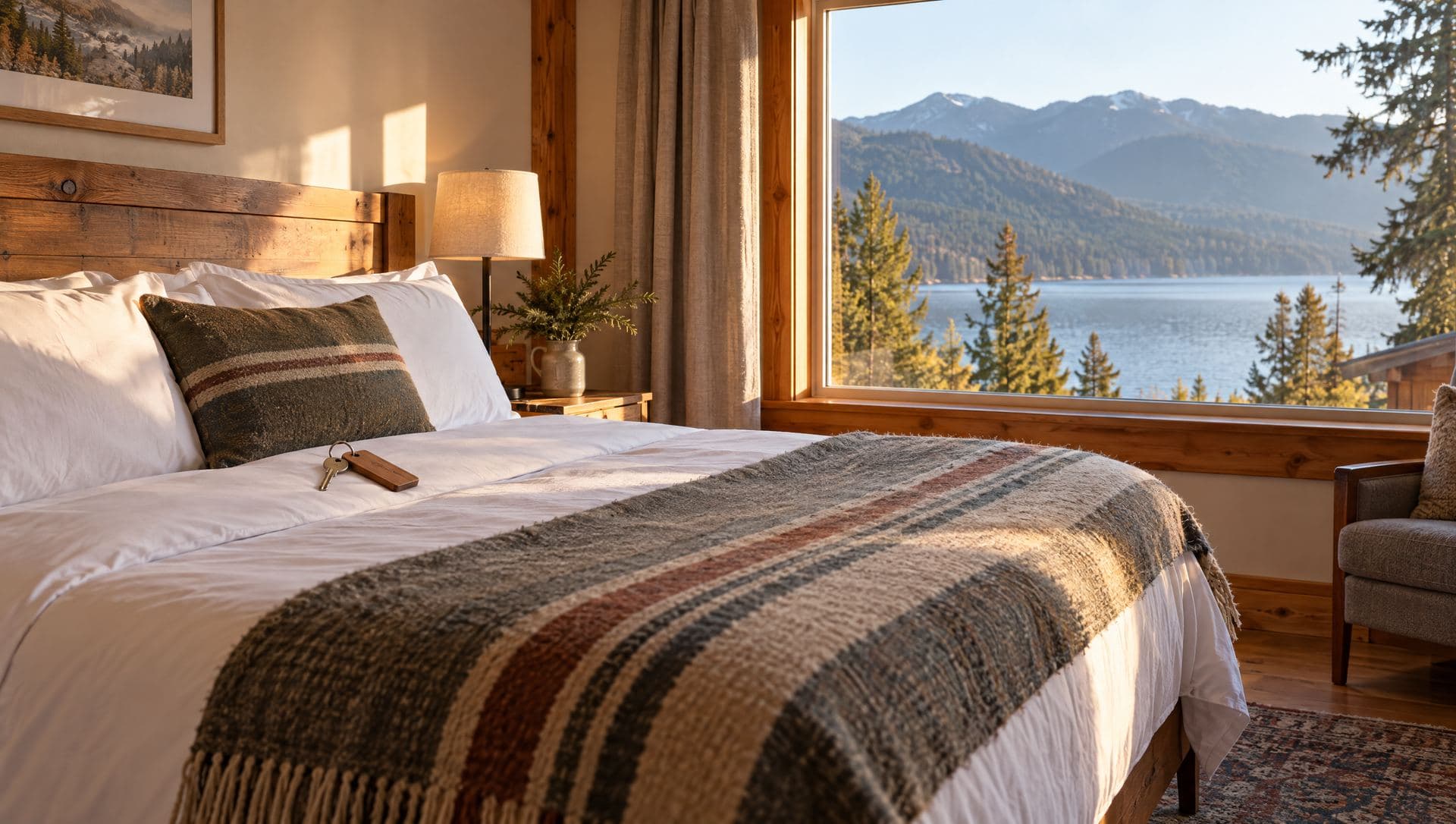
Key takeaways
- The OTA takes a commission on every stay, so each direct booking keeps money the listing would have skimmed.
- Guests bail to the app when a site hides rates, shows stale photos, or makes booking feel risky on a phone.
- Real room and cabin pages with honest photos, real rates, and plain policies are what sell the stay.
- An honest best-rate promise plus one small direct-only perk makes booking direct the smart choice, not a gamble.
- Fix rates and photos, then the booking path, then the trust layer, before spending on a full rebuild.

On this page
What does a small lodge website need to win direct bookings?
A small lodge website wins direct bookings by making the direct path the obvious, safest, best-value choice, so a traveller picks your front door over the app. It shows honest rates and real photos, offers a booking step that works on a phone, promises a best rate you can keep, and answers the questions that make guests hesitate.
Here is the plain math behind it. Every stay booked through a big listing site hands the platform a commission, and the major platforms publish their own standard rates, typically starting around 15 percent of the stay. The listing does real work: it puts your lodge in front of travellers who would never have found you. But once a guest knows your name, every booking that still runs through the app gives away a slice of a stay you could have kept. So the website is a business tool: it earns back the guest the listing introduced, and becomes the place a repeat visitor books without a second thought. That is the same instinct behind good lodging and hotel website design, and behind resort websites that take direct bookings: reduce the friction and doubt that push a ready guest back into the app.
- A best-rate promise you can actually keep, so the direct price is never quietly higher than the listing.
- Small perks that only come with a direct stay: early check-in when it is free, a late checkout, a welcome note, local trail tips.
- A real person to talk to, with a name, a phone number, and an email, so a guest with one question does not bounce to the app.
- Room and cabin pages that show the real space, real rates, and real policies, not a stock photo of a bed that is not yours.
- A booking step that works on a phone in one thumb, whether it is a real-time engine or a clean inquiry form.
- A trust layer: a plain cancellation policy, honest location and route notes, and answers to the questions guests actually ask.

Why do guests bail to the OTA instead of booking direct?
Guests bail when your own site makes booking feel harder or riskier than the app. Stale photos, no visible rates, and a clunky booking step all send the same message: the listing is the safe bet. Each is a leak you can close, and closing them turns a browser into a direct booking.
- 01
Stale or borrowed photos
A dark, years-old gallery, or a stock image of a room that is not yours, tells a guest the place may not match the promise. They open the app to see photos real guests took, and the booking leaves with them.
- 02
No rates anywhere
Hide the nightly price and the guest assumes hassle. The listing shows a number in one tap, so that is where they go. A missing rate is not mystery, it is friction.
- 03
A clunky booking path
A form that breaks on a phone, a calendar that will not load, or a mailto link into the void makes booking feel risky. The app feels safe and instant by comparison.
- 04
No sense of a real host
A faceless site reads like it might be abandoned. Guests trust a booking more when they can see who runs the lodge and reach a human before they commit.
The app does not win because it is better. It wins because your own site made booking feel like a gamble. Fix the gamble and the booking comes home.
None of these leaks look dramatic alone. But a traveller choosing where to spend a Kootenay Lake weekend runs a quiet risk check, and one missing photo or hidden price is enough to send them to a listing that shows both in a tap.
A listing versus your own website: what is the real difference?
An OTA listing rents you a traveller and keeps a cut of every stay. Your own website is the front door you own outright, where you set the story, keep the full rate, and build a guest relationship the app never allows. Both can win discovery. Only one keeps the whole booking.
| What is being compared | OTA listing | Your own website |
|---|---|---|
| Cost per stay | A commission on every booking | No cut taken on a direct stay |
| The guest | Belongs to the platform | Belongs to your lodge |
| Rates and story | Their template, their rules | Your rooms, your words, your photos |
| Repeat bookings | A cut again, every time | Straight to your front door |
| Perks | Whatever the platform allows | Direct-only extras you choose |
| Guest contact | Masked messaging | A real host, name and number |
| Discovery | Strong, that is its job | Grows with SEO over time |
This is not a case for quitting the listings. They earn the introduction. It is a case for making sure the guest they introduce has an easy, honest reason to book direct next time. The same friction thinking runs through how booking friction costs local service businesses: every extra step is a place a ready customer slips away.
How do room and cabin pages sell the stay?
Room and cabin pages sell the stay by showing the truth well: real, current photos, honest rates, plain policies, and a clear next step. A guest deciding between your cabin and a listing wants to picture the actual space and know the actual price. Give them both, and the booking has no reason to leave for the app.
- 01
Honest photos
Real, current photos of the actual room or cabin, in daylight: the view, the bathroom, the kitchenette, the deck. Show the space a guest will walk into, not a flattering angle of one that no longer exists.
- 02
Real rates
The nightly rate, or an honest range across seasons, with what is included. Shoulder-season and peak numbers can differ, and saying so beats making a guest guess or ask.
- 03
Plain policies
Minimum nights, check-in and check-out times, pet rules, and the cancellation window, stated on the page, not buried three clicks deep or left for the confirmation email.
- 04
Who it fits
Say who the room suits: a couple for a Kootenay Lake weekend, a family in the two-bedroom cabin, an angler near Kaslo. Fit language helps the right guest book and the wrong one self-select out.
- 05
The next step in view
A clear book or inquire button on every room page, so a guest who is sold does not have to scroll back up or hunt through a menu to act.
The mistake small lodges make is treating rooms as one blurry gallery. A guest books a specific room for specific nights. When each one has its own real page, the site does the selling a busy host cannot do at ten at night. You can see that structure in a concept lodge website that takes direct bookings.
What does this look like by lodging type?
The pattern holds across small lodging: honest photos, real rates, a phone-friendly booking step, and a named host. What changes is the story on top. A lakeside inn leads with the water, a cabin rental books each unit on its own, and a B&B makes the host the whole point.
- Lakeside lodges and inns
- Lead with the water: the view, the dock, the distance to town, seasonal access. Room pages should show real lake-facing shots and say which rooms see the water and which do not.
- Cabin and cottage rentals
- Each cabin often books like its own little property. Give it a real page with its own photos, its own rate, its own sleeps-how-many, and its own quirks, from the wood stove to the gravel road in.
- Bed and breakfasts
- The host is the product. Show the rooms, the breakfast, and the person running it. A B&B site that hides the host throws away its biggest advantage over a faceless app listing.
- Nakusp and hot-springs stays
- Guests are planning around a soak, a drive, or a ferry. Say the routes, the seasonal road notes, and how far the springs are, so the trip feels handled before the booking.
A realistic before and after
Illustrative composite, no invented numbers. The point is the shape of the change, not a metric.
Before
A small lakeside lodge near Kaslo had one page, a slideshow of dim photos, no rates anywhere, and a contact form that broke on phones. Travellers who found the lodge on a listing site had no reason to book direct, so nearly every stay ran through the app and gave up a commission.
After
The rebuild gave each room and cabin a real page with daylight photos and honest seasonal rates, added a clean phone-friendly booking path, and wrote a plain trust layer with route and cancellation notes. The same travellers now had an easy, honest reason to book direct, and more of them did.
What booking path should a small lodge use?
Use the booking path that fits how the lodge actually runs. A busy property wants a real-time engine that syncs the calendar so rooms never double-book. A small lodge with a few rooms can win with a short, reliable inquiry form and a quick human reply. Either way, it has to work in one thumb on a phone.
The real-time engine is not automatically the right answer. It costs more and adds moving parts, and for a lodge doing a handful of bookings a week, a clean inquiry form with a fast, warm reply often converts better and feels more personal. What matters is that the path is obvious, reliable, and mobile-first. A calendar that will not load, or a form that fails on a phone, sends the guest straight back to the app. A property selling rooms, packages and events through one live system is a bigger job, and that is what an Empire build is scoped for.
The best booking engine is the one your guests can finish on a phone without a second guess. Everything past that is a preference, not a rule.
What trust does a lodge site need before a guest will book?
A guest hands over money to sleep somewhere they have never seen, so the site has to feel safe. That means a plain cancellation policy, honest location and route notes, real answers to common questions, and a host with a name and a number. Trust is what closes the gap between curious and committed.
- A cancellation policy in plain words, with the window and any deposit terms stated before the guest commits, not after.
- Real location and route notes: the drive from Nelson or Kaslo, the ferry, winter access, the last stretch of gravel, cell coverage.
- Answers to the questions guests actually ask, from parking and check-in to pets, wifi, and what is walkable, so nobody has to email to feel safe.
- A named host and a real way to reach them, so a guest with a special request knows there is a person, not a form, on the other end.
Kootenay stays come with real logistics: a ferry, a winter road, a last stretch of gravel, spotty cell service, a drive from Nelson or Nakusp. Saying all of that does not scare guests off, it does the opposite. It tells them a real person has thought about their arrival, which is the reassurance the app cannot offer. Travellers who trust the trip before they pay book without emailing first, and they come back. That is also how a lodge earns the visitor a region works hard to attract, the thread running through how Kootenay tourism businesses win visitors.
What should a small lodge fix first?
You rarely need a dramatic rebuild on day one. Fix where bookings leak first: rates and photos, then the booking path, then the trust layer, then the book-direct value stack. Most of this is a sequence problem, not a budget problem, and the early fixes are the ones a guest feels the moment they land.
- 01Open your own site on a phone as if you were a guest deciding tonight. Note the first moment you cannot see a photo, a rate, or a way to book. That leak is fixed first.
- 02Put real, current photos and honest rates on every room and cabin page, so a guest never needs the app to see what they are getting or what it costs.
- 03Make one clean booking path work on a phone: a real-time engine if you have the volume, or a short, reliable inquiry form if you do not. Test it end to end.
- 04Write the trust layer: cancellation policy, route and access notes, and the questions guests keep asking, so booking direct feels safe.
- 05Add the book-direct value stack, an honest best-rate line and a small real perk, and make sure your listings never undercut your own front door.
If cash flow is tight in shoulder season, the money side is built to be gentle. A clean presence site at KMD starts at $2,000, and booking-heavy builds are scoped to what the lodge actually needs, not a package name. If paying all at once is hard between seasons, the Own It Monthly plan covers it: $2,000 once, or $500 today and 12 monthly payments of $142, $2,204 all in, with no credit checks and the site fully yours at the final payment. The real cost is not the build. It is every direct booking that quietly went to the app instead of your own front door.
Sources and further reading
- Google Search Central: SEO Starter Guide
How clear titles, headings, helpful content, and crawlable structure help both guests and search engines understand a small lodge site.
- Google Business Profile Help: add photos and videos
Guidance on the photos that help travellers understand a property, and that reinforce the same real images used on the lodge website.
- Destination BC: tourism marketing resources
BC tourism marketing guidance for operators, useful for framing an honest, guest-first booking experience across the province.
- Google Search Central: creating helpful, reliable content
The people-first content standard, which maps closely to how a traveller reads a lodge page before trusting it with a booking.
Frequently asked questions
Do I still need the OTAs if I have a direct booking website?
Usually yes, at least at first. The big listing sites are how many travellers discover a lodge they have never heard of, so they work as paid shop windows. The goal is to keep working with them while winning the repeat guest and the ready-to-book traveller through your own front door, where no commission is taken from the stay.
How do I get guests to book direct instead of through an app?
Make booking direct the obvious, safest, best-value choice. Show real photos and real rates, keep the booking path simple on a phone, promise an honest best rate you can keep, add a small perk the listing cannot, and answer the questions that make people hesitate. Booking direct should feel easier than the app, not like a leap of faith.
What should a small lodge website include?
A clear home page that says where you are and who you suit, a real page for each room or cabin with honest photos and rates, a booking path that works on a phone, a plain trust layer with cancellation and route notes, and a named host with a real way to get in touch. Everything else is a bonus once those are solid.
Should a lodge website show its rates?
Yes. A hidden rate sends the guest straight to the listing that shows one. A live price for every date is optional. An honest nightly rate or a seasonal range, with what is included, removes the biggest reason a ready guest leaves your site for the app.
What booking engine should a small lodge use?
It depends on your volume and how you already run the calendar. A lodge with a handful of rooms can do very well with a clean inquiry form and a quick human reply. A busier property benefits from a real-time engine that syncs the calendar so rooms never double-book. The right answer fits how the lodge actually operates, not the fanciest tool.
How much does a small lodge website cost?
A clean presence site at KMD starts at $2,000, and booking-heavy builds are scoped to what the lodge actually needs, not a package name. If cash flow is tight in shoulder season, the Own It Monthly plan covers it: $2,000 once, or $500 today and 12 monthly payments of $142, $2,204 all in, and the site is yours outright at the final payment. No credit checks.
Related pages
- Lodging and hotel websites
- Tourism and resort websites
- Campground and RV park websites
- Web design in Kaslo
- Web design in Invermere
Kootenay Made Digital
I build websites, local presence, and calm AI setups for Kootenay small businesses. Plain language, published prices, and clear work that makes you easier to find and easier to choose.