

 hello@kootenaymade.ca
 Castlegar, BC. Serving the Kootenays and beyond.
 8 min read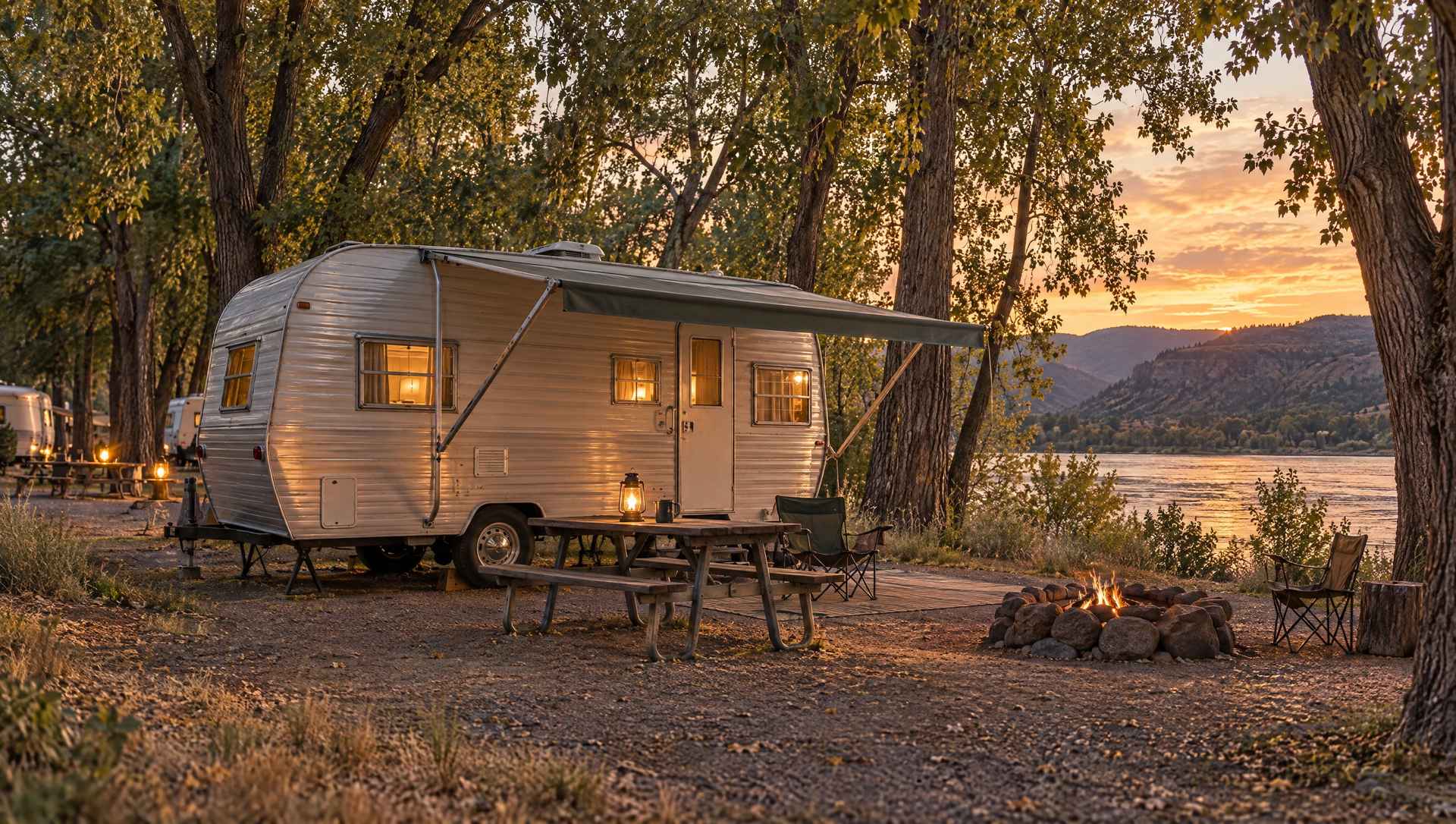
Key takeaways
- Campers plan months ahead from a phone, so the site has to answer the rig-fit and hookup questions before anything else.
- An honest park map and real photos of ordinary sites beat one perfect sunset shot, because they match what people find on arrival.
- Plain rules on pets, quiet hours, generators, and fire bans filter out the bad fits before they book.
- Real-time booking, or a clear request path with deposit and cancellation in plain words, lifts reservations over phone-only parks.
- Seasonal trip content and opening dates keep the site earning search traffic between long weekends.

On this page
What should a campground or RV park website include?
A campground or RV park website needs to answer a planner's questions and take the reservation without a phone call: clear site types and hookups, an honest park map with real site photos, plain rules, real-time availability, deposit and cancellation terms in plain words, and seasonal trip content that earns summer search traffic.
Camping is booked early and booked from a couch. A family in Calgary decides in February where they will spend the last week of July, on a phone, at night, comparing three parks in browser tabs. The park that answers their questions and lets them hold a site right then usually wins, while the one that says call for availability gets a note-to-self that never becomes a call. That is why my work on campground and RV park websites starts from one question: can a stranger tell whether their rig fits, whether their dog is welcome, and how to book, without picking up the phone?
- Will my rig fit? Site length, and whether it is pull-through or back-in.
- What hookups are there: 30 or 50 amp power, water, sewer, or is this a dry site?
- Is there cell signal or wifi, and is it honest about dead zones?
- Which sites have shade, and which bake in full afternoon sun?
- How far is the site from the washrooms, the water, and the parking?
- Are dogs allowed, and are there sites or loops where they are not?
- Can I book the exact site I want, or only a site type?
- What is the deposit, and what happens to it if my plans change?

What do campers check first: site types and hookups?
Campers check whether their setup fits before anything else. A tent camper wants a flat, shaded pad near water. An RV traveller needs the site length, whether it is pull-through, and the exact power, water, and sewer. State every site type and you answer the first question a planner asks: is this park even an option for me?
Hookups are where vague copy costs the most. Full hookups can mean 30 amp when a big rig needs 50, and a site listed at forty feet might have a tree that stops a fifth wheel at thirty-two. Say the real numbers: amperage, whether water and sewer are at the site or shared, and the honest maximum length. Cell signal and wifi deserve the same honesty, because a Kootenay lakeside dead zone is a gift to the camper who wants to unplug and a dealbreaker for the one working remotely. An RV owner who reads clear specs trusts the whole park, and one who books a site that does not fit leaves the review that costs you the next ten.
How should a park show its map and its real sites?
Show a readable park map with numbered sites and honest photos of ordinary sites, not just the sunset dock. A camper choosing a specific site wants to know its shade, its slope, whether it is pull-through, and how far it sits from the washrooms and the water. A truthful map and real photos prevent the arrival-day disappointment that turns into a bad review.
The postcard shot of the dock at dusk sells the feeling, and you should have one, but it is not what a planner needs to choose site 14 over site 22. They need the real gravel pad, the tree that gives afternoon shade, the slope they will level the trailer on, and the walk to the washroom block with a toddler at 2am. Photograph the ordinary sites in ordinary light, and mark the loops, washrooms, water, and pull-through sites on a map a family can actually read. A park that shows its real sites looks more confident than one hiding behind one perfect frame.
Show the site a camper will actually get, not only the view you wish every site had. Honesty on the map is what stops the argument at the gate.
Which rules prevent bad fits before they book?
Clear rules filter out the wrong bookings before they happen. Pets, quiet hours, generators, campfires and the fire-ban reality, check-in and check-out times, and vehicle limits all belong in plain sight. A camper who reads the rules and books anyway is a good fit. The one who finds out at the gate that dogs are not allowed on the beach becomes a problem you could have prevented.
Fire rules matter more every summer. A Kootenay park should say what its normal campfire policy is and, just as clearly, that provincial fire bans override it and can arrive with little notice, so a family planning a July trip around evening campfires is not blindsided by a smoky August. Pets, quiet hours, and generators follow the same logic: state where dogs can go, give the quiet hours and mean them, and say whether generators are allowed and when. Rules are not the fun part of camping, but stating them clearly attracts the campers who respect them and repels the ones who do not.
Phone-only park versus a self-serve booking park
A phone-only park makes the camper work on the park's schedule. A self-serve park lets them see availability and hold a site the moment they decide. The difference is not how the park looks. It is whether a planner in February, or a traveller looking for a same-night site off the highway, can book without waiting for the office to open.
| What is being compared | Phone-only park | Self-serve booking park |
|---|---|---|
| Availability | Call to find out | Visible by date and site type |
| Booking | Only during office hours | Any time, from a phone |
| After hours | Goes to voicemail | Books the site anyway |
| Site choice | Whatever is described by phone | Picked from the map |
| Deposit | Sorted out on the call | Taken at booking, terms shown |
| Highway traveller | Drives on if nobody answers | Grabs a same-night site |
| Your season | Fields calls all summer | Fills sites while you work |
Real-time booking is not the only honest answer. A small park with twelve sites can do fine with a short request form and a fast reply. What loses bookings is the gap: a form that vanishes into an inbox, or a phone number with no note on when someone answers. Whichever path a park picks, the deposit and cancellation terms belong in plain words right beside it, so a camper knows what they are agreeing to and what happens if plans change.
What does the page-by-page anatomy look like?
A campground site needs only a handful of pages, and each one has a job. Home orients the traveller, sites and hookups answer the rig question, the map and rates handle the choosing and the booking, rules filter fit, an area guide earns search traffic, and contact gets a late arrival to the gate. Build those and the site works before the season opens.
- Home
- One screen that says the park name, the nearest town or lake, the season it is open, and a booking button. A traveller should know within five seconds whether this is a lakeside tent site, a full-hookup RV park, or both.
- Sites and hookups
- A plain breakdown of every site type: tent, back-in RV, pull-through, with the length, power, water, and sewer for each. This is the page planners read first, so it earns real detail, not a brochure paragraph.
- Park map
- A readable map with site numbers, loops, washrooms, the water, and the office. Mark shade, slope, and pull-through sites so nobody arrives to a surprise.
- Rates and booking
- Nightly and weekly rates by site type, the booking engine or request form, the deposit, and the cancellation window in plain words. All of it on one page, so nobody has to phone around.
- Rules and FAQ
- Pets, quiet hours, generators, campfires and the fire-ban reality, check-in and check-out times, and vehicle limits. Clear rules filter out the bad fits before they book.
- Things to do
- A short area guide: the lake, the trails, the nearby town, the boat launch. This is the content that earns summer search traffic and helps a family choose you.
- Contact and directions
- A tap-to-call number, the exact address, directions that account for the last gravel kilometre, and honest notes on signal so late arrivals can still find the gate.
A clean park presence site at Kootenay Made Digital starts at $2,000, and a booking-integrated build is scoped to what the park actually needs, not a package name. The Own It Monthly plan spreads it across the season: $2,000 once, or $500 today and 12 monthly payments of $142, $2,204 all in.
How do seasons and highway travellers change the site?
A campground site has a rhythm the calendar sets. Opening dates, shoulder-season value, and local trip ideas keep it useful between long weekends, and clear same-night availability catches the traveller passing through on the highway. A site that only wakes up for July misses the spring planners and the September couples looking for a quiet week by the water.
Content is where the search traffic lives. A page on the best time to watch the larches turn, the closest boat launch, or a rainy-day plan for the nearest town gives a planner a reason to land months before they book. This is the same instinct behind getting a tourism-season website ready for its busy window, and behind prepping a seasonal Kootenay website before summer: the season is short, so the site has to earn attention well before it starts. Highway travellers are the other half. Someone driving Highway 3 at six in the evening, looking for a site tonight, wants to know fast whether there is an open spot and how to grab it, so same-night availability stated clearly and bookable on a phone turns a passing car into a paying camper.
A realistic before and after
Illustrative composite, no invented numbers. The point is the shape of the change, not a metric.
Before
A lakeside park had a pretty homepage, one sunset photo, a phone number, and a note that said call for availability. Site types and hookups were vague, there was no map, and the fire and pet rules lived nowhere. Planners could not tell if their rig fit, so many booked the park down the road that let them see and hold a site online.
After
The rebuild led with plain site types and hookup specs, added an honest map and real photos of ordinary sites, wrote the rules out, and put real-time booking with clear deposit and cancellation terms front and centre. A short area guide brought in planners months early, and same-night availability caught highway travellers the old site sent driving on.
What should a park fix first before booking season?
You do not need a full rebuild the week before you open. Fix where bookings leak first: the rig-fit and hookup page, then the map, then real photos, then the rules, then the booking path, then the seasonal content. Most of this is a sequence problem, not a budget problem, and the early fixes are the ones a February planner feels first.
- 01Put every site type, rig length, and hookup on one plain page, so a planner in February knows their rig fits before anything else.
- 02Publish an honest park map with site numbers, washrooms, the water, and which sites are shaded, sloped, or pull-through.
- 03Add real photos of ordinary sites, not just the sunset dock, so a family sees the actual gravel pad they are booking.
- 04State the rules: pets, quiet hours, generators, campfires and fire bans, and check-in times.
- 05Turn on real-time booking, or a clear request path, with the deposit and cancellation window stated in plain words.
- 06Add a short area guide and your opening and shoulder-season dates, so the site keeps earning search traffic between long weekends.
A campground site compounds through the season: every clear answer you add is one less phone call and one more camper who booked without hesitating. When the site says the rig fits, shows the real pad, states the rules, and takes the reservation, the park stops competing on who answers the phone fastest and starts filling sites while the office is closed. The real cost is not the fix. It is every planner who could not tell whether their week by the water was even an option, and quietly booked somewhere that made it obvious.
Sources and further reading
- Google Search Central: SEO Starter Guide
Google explains how clear titles, headings, helpful content, and useful structure help both travellers and search systems understand a campground site.
- Google Search Central: creating helpful content
Google frames strong pages around people-first usefulness and real experience, which is exactly how a camper reads a park before booking.
- Google Business Profile help: photos and videos
Guidance on the photos that help customers understand a place, which is why real site and map photos beat a single sunset shot.
- BC Parks camping reservations
An example of a public real-time reservation system: pick a date, see what is open, and hold the site online. A private park can offer the same clarity.
Frequently asked questions
Do campgrounds need online booking?
Most benefit from it. Campers plan months ahead, often at night from a phone, and a park that only takes phone reservations loses the ones who will not wait until morning. Real-time booking helps but is not always required. A clear way to reserve or request a site without a phone call almost always lifts bookings.
What should a campground website include?
Plain site types and hookups, an honest park map, real photos of ordinary sites, clear rules on pets, quiet hours, generators and fires, nightly rates, a booking or request path with deposit and cancellation terms, directions, and a short area guide. Those pieces answer a planner and take the reservation.
How should a park show its site map?
Publish a readable map with numbered sites, loops, washrooms, the water, and the office, and mark shade, slope, and pull-through sites. A camper choosing a specific site wants to know how far it is from the washrooms and whether it sits in sun or shade, and a truthful map prevents arrival-day complaints.
What photos work best for a campground?
Real photos of the actual sites, not only the postcard shot of the dock at dusk. Show a typical gravel pad, a shaded loop, the washroom block, and the view a camper will really have. Honest, ordinary photos build more trust than one perfect sunset, because they match what people find when they arrive.
Should campground rates be public?
Yes, in almost every case. Nightly and weekly rates by site type let a camper self-qualify and cut down on phone calls that go nowhere. Hiding rates behind a call rarely helps a park that competes with public campgrounds and other private parks that post their prices.
How much does a campground website cost?
A clean park presence site at Kootenay Made Digital starts at $2,000. A build with a real-time booking engine is scoped to what the park actually needs, so the price depends on the reservation setup rather than a package name. The Own It Monthly plan spreads the full price across the season for parks that would rather pay over twelve months.
Related pages
- Campground and RV park websites
- Tourism and resort websites
- Web design in Christina Lake
- Web design in Nakusp
Kootenay Made Digital
I build websites, local presence, and calm AI setups for Kootenay small businesses. Plain language, published prices, and clear work that makes you easier to find and easier to choose.