

 Castlegar, BC. Serving the Kootenays and beyond.
 10 min read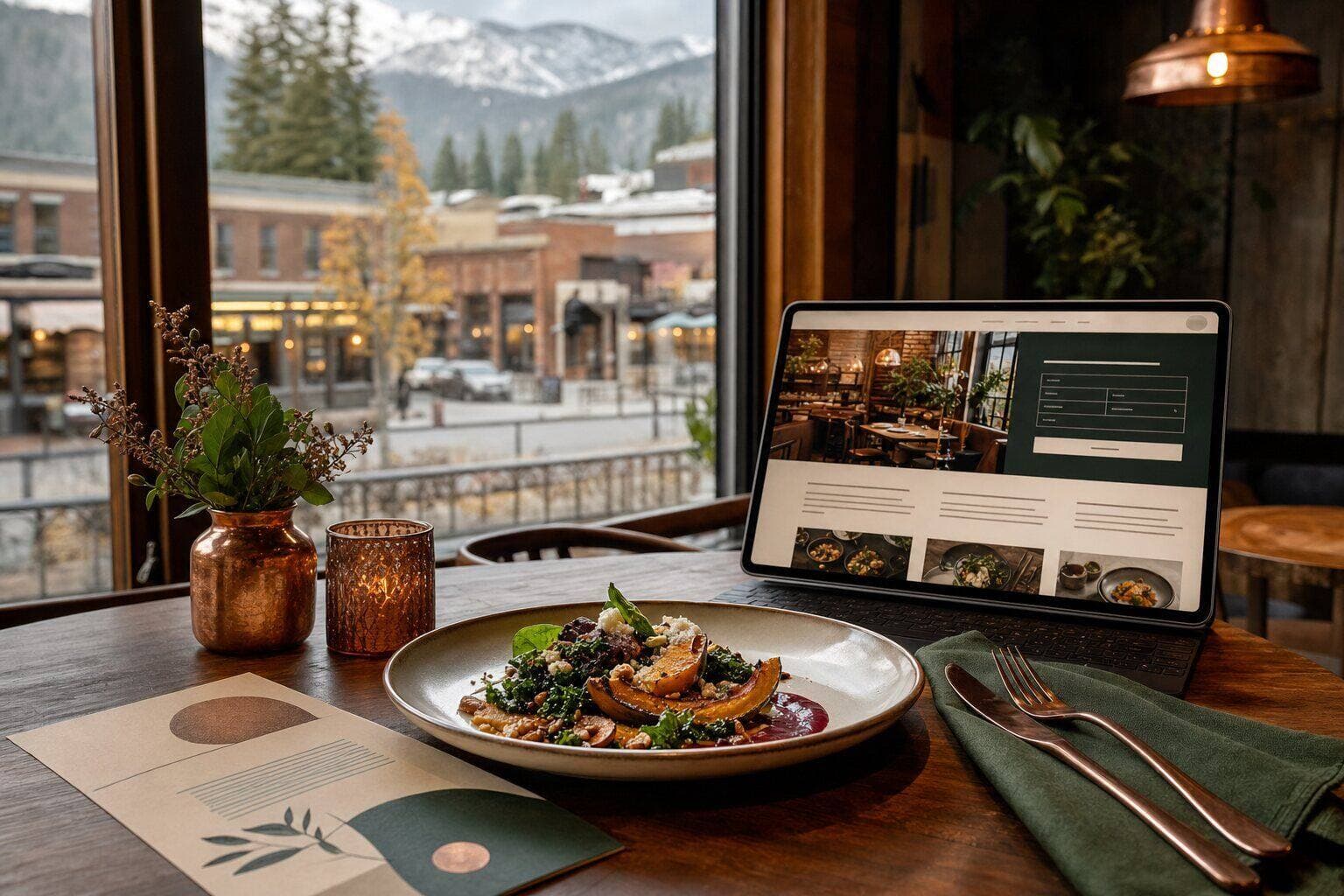
Key takeaways
- BentoBox and Popmenu are good at templates, online ordering, and reservations. This is not a hit piece.
- The trade-offs are real: monthly subscriptions, per-order fees, card processing, platform lock-in, and limited SEO and customization.
- A custom restaurant website still handles menus, ordering, and reservations, but on your domain, with your data and your search control.
- Over two to three years, a custom build often costs less than stacked platform fees, and you keep the asset.
- At Kootenay Made Digital, custom websites start from 2,000 dollars, scoped to the restaurant.

On this page
What is BentoBox good at?
BentoBox is a strong restaurant platform, and it is fair to say so. It ships polished templates, built-in online ordering for takeout and delivery, reservations, events, and gift cards, plus a dashboard your staff can edit. For a single location that wants an all-in-one bundle, it does its core job well.
Popmenu is in the same category and also good at what it does: attractive menu-driven sites, ordering, and marketing features. If you are weighing a custom site against these tools, start by giving them their due. The point of this guide is not that they are bad. It is that the public website layer, the part that has to rank, load fast, and stay yours, is where a custom build wins.
- Polished restaurant templates that look professional out of the box, with menus, photos, and hours laid out cleanly.
- Built-in online ordering, takeout, and delivery handling so you can take orders without stitching together separate tools.
- Reservations, waitlists, events, and gift cards that work on day one without a developer.
- A managed dashboard your staff can edit, so menu and hours changes do not need a web team.

Good at menus and ordering is not the same as good at being found.
Where do BentoBox and Popmenu fall short?
The gaps are not in the daily features. They show up in cost, control, and search. You pay every month forever, often with per-order fees on top. You do not fully own the build. And while the platforms cover SEO basics, deeper technical optimization and content control are limited compared with a custom site.
- Subscription cost that never ends, plus per-order fees and card processing that scale with how busy you get.
- Platform lock-in: the site, templates, and often the customer and order data stay inside the provider if you leave.
- An SEO ceiling: editable titles and metadata are fine, but advanced page structure, schema, and content depth are constrained.
- A performance ceiling: you accept the scripts and assets the platform ships, with limited control over mobile load time.
- Limited customization: you work within the template system, so a truly distinctive site is hard to achieve.
BentoBox vs a custom restaurant website: what is the difference?
BentoBox and Popmenu are managed platforms you rent. A custom website is an asset you own. The platforms win on speed-to-launch and a hands-off dashboard. A custom site wins on search control, performance, ownership, and long-run cost. Here is the honest side-by-side.
| What is being compared | BentoBox / Popmenu | Custom website |
|---|---|---|
| Ownership | You rent the site and templates | You own the site, code, and content |
| Cost shape | Monthly forever, plus per-order fees | Larger one-time build, low ongoing hosting |
| SEO control | Editable basics, limited depth | Full structure, schema, and content control |
| Page speed | Whatever the platform ships | Optimized directly by your build |
| Customization | Within the template system | Designed around your restaurant |
| Online ordering | Built in, bundled fees | Your choice of provider and terms |
| Reservations | Built in | OpenTable, Resy, Tock, or a form |
| If you leave | Site and data stay behind | Everything comes with you |
| Best for | Single location wanting all-in-one | Restaurants competing on local search |
What does a restaurant platform really cost?
The advertised price is rarely the real price. BentoBox starts with an accessible base subscription, then adds a per-order fee on takeout and delivery plus around three percent card processing. Popmenu starts higher and charges separately for ordering, AI add-ons, and extra locations. Busy restaurants can pay several hundred dollars a month.
That is the part to model before you sign. A quiet cafe with light online ordering may pay little. A busy restaurant doing hundreds of orders a month pays the base plan plus a fee on every single ticket plus processing, month after month. None of that builds an asset you keep.
Here is the shape of it, hedged because your real number depends on order volume. If a platform runs a few hundred dollars a month once the base plan, per-order fees, and card processing are stacked up, that is a few thousand dollars a year, every year, whether or not the restaurant grows. A one-time custom build is a single larger number that does not renew, so the longer you run, the more the math leans toward owning the site. Price it on your own order count before you trust either figure.
A custom website is the opposite shape. At Kootenay Made Digital, custom websites start from 2,000 dollars, scoped to the restaurant, with low ongoing hosting after that. If you would rather spread it, the Own It Monthly plan is $2,000 once, or $500 today and 12 monthly payments of $142, $2,204 all in. You still pay your chosen ordering provider, but you negotiate those terms instead of accepting a bundle. Over two to three years, the totals often favour the custom build, and you own the result.
Why does a custom restaurant website win?
A custom site wins on the four things platforms cannot fully give you: ownership, speed, search depth, and freedom from per-order fees. Those are exactly the levers that decide whether a Kootenay restaurant gets found by a hungry visitor at 6pm, and whether you keep the margin on the order.
- 01
You own the site and the data
A custom site lives on your domain, your hosting, and your analytics. If you ever switch providers, the site, content, and customer data come with you instead of staying locked behind a subscription.
- 02
Speed and Core Web Vitals you control
Restaurant sites live and die on mobile load time. A custom build lets you optimize images, fonts, and scripts directly, instead of accepting whatever the platform ships to every customer.
- 03
Real SEO depth
You control page structure, schema, internal links, location pages, and content. That is how a Kootenay restaurant ranks for "best pizza in Nelson," not just for its own name.
- 04
No per-order tax forever
Platform per-order fees and processing add up every single month. A custom site can route ordering through the provider you choose, on terms you negotiate, not a bundle you cannot unbundle.
Can a custom site still handle ordering, menus, and reservations?
Yes, and this is the part people worry about most. A custom restaurant website still does everything the platforms do. It takes online orders, shows live menus, books tables, and sells gift cards. The difference is that you choose each tool and keep it inside a fast page you own, instead of renting a bundle.
- Direct ordering tools
- A custom site can embed or integrate ordering from providers like a commission-light platform of your choice, so the order button still works and you keep more of each ticket.
- Reservations
- Connect OpenTable, Resy, Tock, or a simple request form. The booking widget sits inside your fast, owned page instead of replacing it.
- Menus that rank
- Real text menus with proper headings and structured data, not a flat PDF or an image, so Google and AI assistants can read and quote them.
- Gift cards and events
- Sell gift cards, list events, and capture private-dining inquiries with tools that plug into the site rather than dictating it.
The order button still works. The reservation widget still works. The menu still updates. What changes is that the page wrapped around them is fast, search-friendly, and yours. See how I put this together on my restaurant and cafe websites page.
How do you choose between a platform and a custom build?
Choose on the numbers and the time horizon, not the demo. Add up the true platform cost including per-order fees, check who owns your data if you leave, test the speed, and look at who actually ranks for your category in your town. Then compare the multi-year total against a custom build.
- 01Add up the true monthly platform cost: base subscription, per-order fees, processing, and any add-on modules or extra locations.
- 02Ask who owns the domain, the content, and the customer and order data if you leave.
- 03Test a current platform site on PageSpeed Insights and note the mobile score.
- 04Search Google for your category plus your town and see whether platform sites or custom sites rank.
- 05Compare the multi-year platform total against a one-time custom build plus your own ordering provider.
If you are a single location that values a hands-off dashboard and the monthly math works, a platform is a fair choice and I will tell you so. If you compete hard on local search, do enough volume to feel per-order fees, or plan to grow, a custom site usually wins. No website yet? I can build the custom restaurant site from scratch, menus and ordering and all. Already have one? The free check-up will show you exactly where you stand before you commit to anything.
Sources and further reading
- BentoBox pricing
BentoBox publishes its plans and add-on structure. Confirm the current base price, per-order fees, and processing rate before you sign, because the true monthly cost depends on order volume.
- Popmenu pricing
Popmenu lists tiers and modules. Online ordering, AI add-ons, and extra locations are priced separately, so ask for full contract terms and the per-order fee in writing.
- BentoBox pricing and fees breakdown (Sauce)
A third-party breakdown of how the base subscription, per-order fees, and card processing stack up into a real monthly figure for a busy restaurant.
- Google Search Central: Core Web Vitals
Why mobile load speed and stability matter for ranking and for hungry customers deciding in seconds whether to order.
Frequently asked questions
Is BentoBox a good restaurant website platform?
Yes. BentoBox is good at its core job: clean restaurant templates, built-in online ordering, reservations, events, and a dashboard staff can edit. The question is not whether it works. It is whether the subscription cost, per-order fees, lock-in, and SEO ceiling are the right trade for your restaurant over several years.
What is the best BentoBox alternative for a restaurant?
For restaurants that want to rank, load fast, and own their site, a custom website is the strongest alternative. It still handles menus, reservations, and online ordering by integrating the ordering provider you choose, but it lives on your domain with your data and your SEO under your control.
How much does BentoBox actually cost per month?
BentoBox advertises an accessible base subscription, but the real monthly cost includes a per-order fee on takeout and delivery plus card processing of around three percent. A busy restaurant can pay several hundred dollars a month once order volume is added in. Always price it on your real order count.
Is Popmenu cheaper than a custom website?
It depends on the time horizon. Popmenu is a monthly subscription with add-on modules and extra-location fees, so it never stops costing money. A custom site is a larger one-time build with low ongoing hosting. Over two to three years, a custom site often costs less overall and you keep the asset.
Can a custom website still do online ordering and reservations?
Yes. A custom restaurant website can embed or integrate online ordering, reservations like OpenTable or Resy, gift cards, and events. You choose the ordering provider and its fee structure instead of being locked into one bundle, and the order button lives inside a fast page you own.
Will a custom site rank better than a BentoBox or Popmenu site?
It can, because you control page structure, structured data, location content, and load speed. Platform sites cover SEO basics well, but advanced technical SEO and content depth are limited. For competitive local searches like "best brunch in Nelson," that control is often the difference.
How much does a custom restaurant website cost at Kootenay Made Digital?
Custom websites start from 2,000 dollars, scoped to the restaurant. If you need a full ordering, menu, and reservation system tied into your operations, that is a larger build I price after mapping it. See my restaurant and cafe websites page for what is included.
Should every restaurant leave BentoBox?
No. If you are a single location that values a hands-off dashboard and the all-in-one bundle, and the monthly cost works for you, BentoBox is a reasonable choice. The custom case is strongest for restaurants competing hard on local search, with the volume to feel per-order fees, or planning to grow.
Related pages
Kootenay Made Digital
I build websites, local presence, and calm AI setups for Kootenay small businesses. Plain language, published prices, and clear work that makes you easier to find and easier to choose.