

 hello@kootenaymade.ca
 Castlegar, BC. Serving the Kootenays and beyond.
 9 min read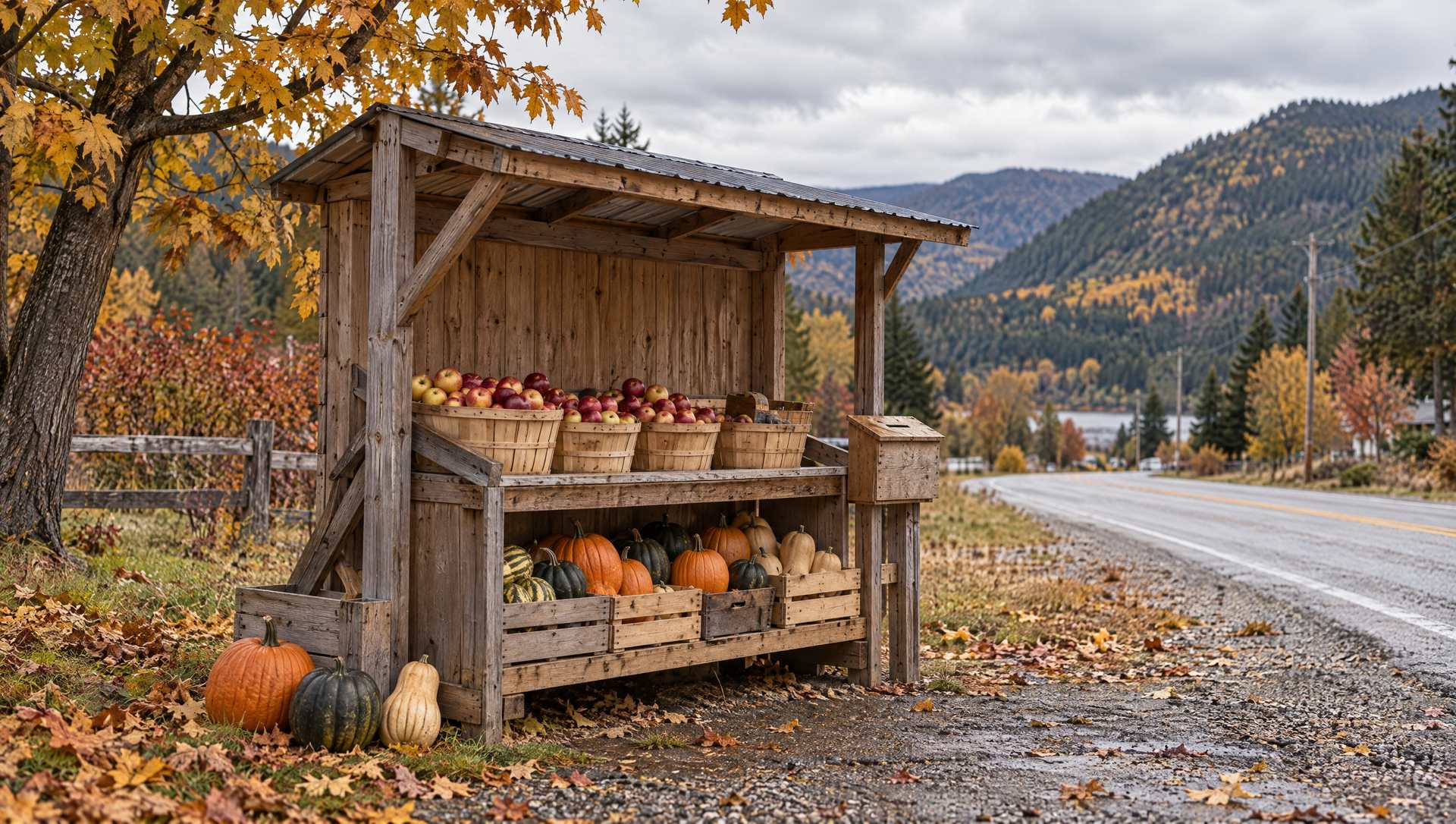
Key takeaways
- Online first means findable, trustworthy, and easy to act on before anything fancy.
- Build in the order customers use it: Google profile, then a clear website, then proof, then an easy contact path.
- A website you control beats relying on a Facebook page or scattered listings alone.
- Ads, automation, big SEO campaigns, and daily posting work after the basics stop leaking.
- A simple one-week foundation pass removes the most common reasons people hesitate.

On this page
What does online first actually mean for a local business?
Online first means being findable, trustworthy, and easy to act on before anything fancy gets a vote. It is the layer every other tactic depends on. If people nearby cannot find you, understand you, trust you, and contact you, then ads, automation, and SEO are just expensive scenery sitting on a wobbly shelf.
Small business owners get sold the internet like a junk drawer with a payment plan. Post daily. Run ads. Fix SEO. Launch email automation. Start a new channel. Add AI. Redesign the logo. Some of that can help eventually. Almost none of it belongs first.
The rule is simple: every first online move should help a real person nearby answer four questions. What do you do, where do you work, why should I trust you, and what do I do next? Get those four answers crisp and the rest finally has somewhere useful to plug in.
Local businesses do not need more channels first. They need a dependable home base.
- 01
Findable
People can discover you in Google Search, Maps, referrals, and social bios without guessing what you do or where you work.
- 02
Trustworthy
The business looks active and real through current photos, reviews, named services, and information that matches everywhere it appears.
- 03
Easy to act on
A visitor can call, book, ask, buy, reserve, or visit in one obvious step, not after hunting through tiny links and vague buttons.
- 04
Kept current
Hours, photos, proof, and profile details stay fresh on a simple monthly rhythm so the foundation never quietly goes stale.
In what order should a small business build its online presence?
Build the foundation in the order customers actually use it: complete the Google Business Profile, build a clear website you control, add trust proof, make the next step obvious on mobile, then add specific local language. Each layer strengthens the next, so doing them out of order wastes effort.
The order matters because the layers feed each other. A strong profile sends people to the website. A clear website turns profile visitors into calls. Reviews and photos make both feel real. A clean contact path turns attention into actual work. For many local businesses the first serious impression happens on the Google profile, before the website visit, so it cannot be treated like a dusty listing.
- 01
Complete the Google Business Profile
Claim or verify it, then fix the details customers use: category, hours, phone, website link, services, service area, photos, and description. Google asks you to keep this accurate and current.
- 02
Build a clear website you control
Start lean if the business is simple: homepage, services, proof, FAQ, and a contact path can be enough. Add pages when you have distinct services, towns, or audiences.
- 03
Add trust proof that feels alive
Use recent photos, reviews, testimonials, project examples, product details, and local context. Proof is what tells a stranger the business is active and worth contacting.
- 04
Make the next step obvious on mobile
Tap-to-call, short forms, booking links, directions, and response-time clarity. If the phone path is clumsy, every traffic source you build later gets weaker.
- 05
Add specific local language
Name the services, towns, neighbourhoods, customer types, season, and access details so the business sounds like it understands the valley, not a template.
Start lean if the business is simple. My one-page website guide covers when a single page is enough and when it becomes a trap. If the phone path is clumsy, fix it early, because booking friction quietly costs service businesses real work.
Website vs Facebook page: which does a local business need first?
A local business needs a website it controls first, with a Facebook page as an amplifier on top. A social page is rented space with a vague offer and a feed that buries detail. A website gives searchers a clear offer, stronger proof, service detail, and a contact path that does not depend on a platform you do not own.
| What is being compared | Facebook page only | A website you control |
|---|---|---|
| Who owns it | The platform owns reach and rules | You own the address, content, and data |
| Offer clarity | Buried in a scrolling feed | A clear homepage and service pages |
| Proof | Scattered posts and a few reviews | Photos, reviews, and examples in one place |
| Search visibility | Limited in Google results | Indexable pages built for local search |
| Contact path | Messenger or a profile button | Tap-to-call, forms, booking, directions |
| Longevity | Changes when the platform changes | Stable foundation you can grow on |
This is not a reason to abandon social. Social pages are useful once there is somewhere solid to send people. The point is sequence: the website is the home base, and the social page points back to it.
Signs your online foundation is weak
Your foundation is weak when a stranger cannot tell what you sell and how to contact you in ten seconds, when your profile and website disagree, when photos look abandoned, or when the contact path fights mobile users. If these basics leak, every later tactic inherits the leak.
- A stranger can tell what you sell, where you work, and how to contact you within ten seconds.
- Your Google Business Profile matches your website for hours, phone, service area, services, and photos.
- The business category is specific enough to match what people actually search for.
- Photos prove the business is active now, not frozen in a season from years ago.
- Reviews, testimonials, or project photos answer why someone should trust you.
- The main action works cleanly on a phone: call, book, request a quote, order, or reserve.
- A customer can understand price context, timing, or service area before they call.
- The site avoids friction that hurts mobile users: tiny text, slow pages, hidden forms, or intrusive popups.
If most of those are true, the foundation is solid and you can think about growth tactics. If several are shaky, fix them before buying another tool. Google's own SEO Starter Guide is not mystical about this. Search engines need to understand your content, and users need enough information to decide whether to visit and act. The small-business translation: write useful pages for real buyer questions, keep the structure crawlable, and do not hide the important details behind cleverness.
What does online first look like by business type?
The same foundation applies to every local business, but the proof and the next step change by type. A landscaper, cafe, clinic, kayak rental, maker, and accountant all need to be findable and easy to contact. What differs is which proof builds trust and which action matters most.
- Trades and home services
- Service area, before and after proof, job photos, reviews that name the work, warranty notes, and tap-to-call.
- Restaurants, cafes, breweries
- Hours, menu, patio or seasonal status, reservation rules, takeout links, parking, and Google profile freshness.
- Tourism and outdoor operators
- Season dates, availability, meeting point, what to bring, cancellation policy, smoke or weather updates, and mobile booking clarity.
- Retail, makers, farm stands
- Products, local-maker proof, gift cards, pickup, market schedule, current photos, and reasons to visit in person.
- Clinics and wellness
- Practitioners, services, booking, location, accessibility, payment or insurance notes, and intake steps.
- Professional services
- Who you help, problems solved, process, credentials, local proof, a consultation path, and clear fit signals.
This is where generic advice gets lazy and local work earns its boots. A Kootenay business should sound like it understands Castlegar, Nelson, Trail, Rossland, Creston, and Cranbrook, plus the valley roads, seasons, and patchy signal between them. The deeper version is in my local SEO guide.
What usually does not need to come first?
Later tactics are not bad. They are bad first, when the foundation is leaking. Daily posting, paid ads, big SEO campaigns, advanced automation, and large brand systems all assume a clear offer and a working contact path already exist. Without that base, they pay for confusion at scale.
- 01
Daily social posting
Useful once there is somewhere solid to send people and a reason to follow beyond looking busy.
- 02
Paid Google or Meta ads
Better after the offer and landing page can convert. Otherwise the budget pays for confusion at scale.
- 03
Big SEO content campaigns
Wasteful if the profile, homepage, service pages, proof, and contact path are still unclear.
- 04
Advanced automation
Powerful after enquiries, orders, bookings, or signups already have a clean path to follow.
- 05
Large brand systems
Helpful for growth later, not a substitute for saying what the business does and how to buy from it.
You can run the most beautiful ad campaign in the valley and still lose people if the landing page is vague, the profile has stale hours, or the contact form feels hostile. Once the message is clear, the site still has to feel usable: Google's page experience guidance points to mobile display, secure serving, Core Web Vitals, and a clear distinction between main content and distractions. For local businesses that is not abstract. It is the difference between someone tapping call and someone backing out of a slow, cramped page from a truck with two bars of signal.
How do I fix my online foundation in one week?
Fix the foundation in one week with a focused pass: audit how you appear in search, fix the Google profile, rewrite the website first screen, add real proof, test the mobile contact path, answer common buying questions, then set a monthly care rhythm. It will not solve every growth problem, but it removes the most obvious reasons people hesitate.
- 01Search your business like a customer in your town. Note what appears, what is wrong, and what looks abandoned.
- 02Fix Google Business Profile basics: hours, phone, website link, category, services, service area, and photos.
- 03Rewrite the website first screen so the offer, location, proof, and next step are impossible to miss.
- 04Add real proof: recent photos, named services, testimonials, reviews, or project examples.
- 05Test the contact path on a phone. Shorten forms, add tap-to-call, clarify response time, and remove dead links.
- 06Add the questions people ask before buying: price range, timing, booking, travel area, parking, and policies.
- 07Set a monthly care rhythm: profile updates, fresh proof, review asks, and one useful page improvement.
What a small local business needs online first is not an empire of content, ads, and decorative dashboards. It is a dependable home base that helps real people find the business, understand the offer, trust the proof, and take the next step. If you want a second set of eyes on which piece is weakest, the free check-up will point to the one fix that moves the most. When you are ready to build the home base properly, my services start with a presence site and grow from there.
Sources and further reading
- Google Business Profile Help: edit your profile
Google tells businesses to keep address, hours, contact info, and photos accurate so customers can find and understand the business.
- Google Search Central: SEO Starter Guide
Google frames SEO as helping search engines understand content and helping users decide whether to visit. There is no secret button and no guaranteed first place.
- Google Search Central: page experience
Points site owners toward the whole page experience: Core Web Vitals, secure serving, mobile display, and clear main content.
- Google Search Central: LocalBusiness structured data
Documents local details such as address, phone, opening hours, geo, and departments for when structured data is appropriate.
Frequently asked questions
What should a small local business do online first?
Start with the foundation people use to find, trust, and contact you: a complete Google Business Profile, a clear website you control, real proof, accurate contact details, and one obvious next step. Everything else comes after that base works.
Do I need a website before a Google Business Profile?
No. You can claim and improve your Google Business Profile first, especially starting from zero. But profile and website work best together, because the website gives you room to explain services, proof, service area, and next steps.
Is a Facebook page enough for a local business?
Usually not. Social pages are useful amplifiers, not a complete home base. A website you control gives searchers a clearer offer, stronger proof, and a contact path that does not depend on a social platform you do not own.
How many pages does a small business need at launch?
Simple businesses can launch with a strong homepage, service sections, an about or proof section, an FAQ, and a contact path. If you have multiple services, towns, or booking decisions, separate pages become useful faster.
Should I run Google Ads before fixing the website?
Only if the offer, page, proof, contact path, and budget are already solid enough to convert paid traffic. If the foundation is weak, Ads just send expensive visitors into a leaky bucket and the spend disappears.
What if my business serves several Kootenay towns?
Name the real service area clearly, then add useful local context only where it helps customers. Castlegar, Nelson, Trail, Rossland, Creston, and Cranbrook do not need duplicate pages with swapped town names. They need honest local detail.
When should SEO content come in?
After the core pages make sense. Helpful guides, FAQs, service pages, and local pages work best when they support a clear business foundation instead of trying to compensate for a vague one.
What is the fastest first-week improvement?
Update the Google profile, rewrite the first screen of the website, add recent proof, make the contact path obvious on mobile, and remove any wrong hours, stale photos, or confusing service claims.
Related pages
- Auto repair and tire shop websites
- Salon and barbershop websites
- Farm and agriculture websites
- Web design in Castlegar
- Web design across the West Kootenay
Kootenay Made Digital
I build websites, local presence, and calm AI setups for Kootenay small businesses. Plain language, published prices, and clear work that makes you easier to find and easier to choose.